
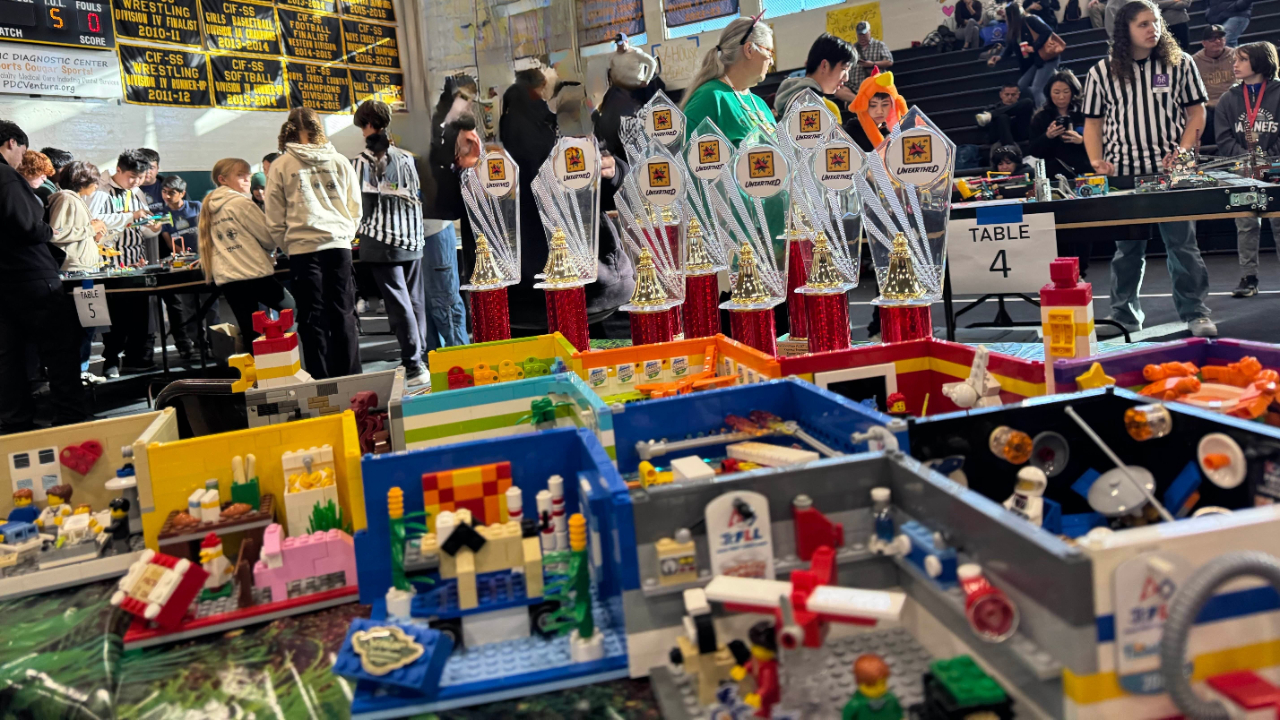
Regional Tournaments in Review: Southern California FIRST LEGO League
Jan 04, 2026Over the weekend of December 6 &7, Southern California wrapped up its FIRST LEGO League (FLL) regional tournaments, marking a major milestone in the 2024–2025 season. These events brought together some of the strongest teams from across the region and showcased not only impressive robot performances, but also the collaboration, creativity, and professionalism that make FLL such a powerful learning experience.
Understanding the Southern California FLL Tournament Pathway
Southern California’s FLL season follows a structured progression designed to give teams multiple opportunities to learn, grow, and compete. The season begins with qualifying tournaments, where teams compete locally and earn placement into regional tournaments based on their performance across all judged areas.
This year, Southern California hosted eight regional events, with each team’s regional assignment determined by the qualifier they attended earlier in the season. Each regional advanced approximately six teams to the Southern California Championship, scheduled for January 18. With roughly 307 teams competing across regionals, only about 48 teams advanced to the Championships.
Leveraging Data with FLL Nexus
One standout improvement this season was Southern California’s use of FLL Nexus, a fantastic tool for collecting and sharing robot game performance data. Nexus allowed teams, coaches, and event organizers to view robot scores in a clear, consistent format, providing valuable insight into performance trends across events.
Using Nexus data across 307 teams, we gain a clearer picture of how competitive this season truly was:
- Total Teams that participated in Regionals 307
- Average maximum robot score: 277.1
- Median maximum robot score: 270
- Teams scoring above 300: 111
- Teams scoring above 350: 59
- Teams scoring above 400: 26
- Teams scoring at or above 450: 9
An especially interesting data point shows that 44 teams recorded higher scores during practice runs than during official matches. This reinforces what many coaches already know: competition pressure, time constraints, table variance, and nerves all play a role on event day. Consistency under pressure is just as important as raw capability.
Notable Robot Game Performances at Regionals
Below is a snapshot of several high robot game scores recorded at regional tournaments this season:
- LIT (Team 61520) – 510
- The Bikini Bottom Brick Builders (Team 55577) – 510
- Le Go-Getters (Team 70541) – 475
- Perpendicular Purple People Eaters (Team 16023) – 465
- Garage Engineers (Team 50739) – 455
- 8Droid (Team 53113) – 450
- Top Sparks (Team 74167) – 450
- botHacker (Team 67005) – 450
- Terra Techs (Team 55879) – 450
- IDEA SQUAAAAAAD!!! (Team 71087) – 445
- OctoPie (Team 12742) – 445
- Team Atoms (Team 70931) – 435
- Team 56614 – 430
- seaSTARZ (Team 65412) – 430
- The Dum-Dums (Team 71764) – 430
- Code Mech (Team 55743) – 420
- Cntrl+Alt+Elite (Team 66747) – 420
- robotastic smurfs (Team 60406) – 420
- Band of Bots (Team 71484) – 420
- Robo-Curiosity (Team 71220) – 415
- ILCS RoboLions T-Wrecks (Team 53373) – 415
- MissionSolvers2025 (Team 72983) – 410
- Operation T.A.C. (Team 3399) – 410
- Code Breakers (Team 55769) – 405
- My Infinity (Team 57596) – 405
Robot Scores Are Only Part of the Story
While robot game scores are often the most visible metric, they are far from the only factor that determines advancement in FIRST LEGO League. Teams are evaluated across Innovation Project, Robot Design, Core Values, and Robot Performance.
After coaching for seven years and participating in regular-season events, world championships, invitationals, and off-season competitions, I firmly believe that the robot game represents less than the suggested 25% weight in actual advancement decisions.
What often makes the difference is how teams conduct themselves throughout the day. Judges notice Gracious Professionalism everywhere, including at the robot table, in the pit, at practice tables, during judging sessions, and even during lunch.
Just as importantly, adult behavior matters. Coaches and parents should aim to prepare students to be autonomous on competition day. That means:
- No touching the robot
- No coding for the team
- No problem-solving for the team
Adults can support by resetting missions at practice tables or reminding teams to stay organized, but the learning must belong to the students. Competition day is their opportunity to demonstrate growth, resilience, and teamwork and to see whether the preparation throughout the season paid off.
A Special Shout-Out
A special shout-out goes to the students on IDEA SQUAAAAAAD!!!, who took the initiative to use Google Sheets to compile and analyze robot score data using filters and functions, which is the data used in this blog post. This type of work is an excellent stepping stone into FTC scouting, data analysis, and real-world STEM applications and a great reminder that FLL learning extends far beyond the robot table.
As we look ahead to Championships, Southern California teams continue to raise the bar, not just in scores, but in preparation and professionalism. Best of luck to all teams advancing, and congratulations to every student, coach, volunteer, and parent who helped make this season a success.
Alex Beatty
Owner - Ctrl Alt Idea
Don't miss a beat!
Blogs and Updates delivered to your inbox.
We hate SPAM. We will never sell your information, for any reason.